
When knowledge traverses contexts and technology intervenes in processes of understanding, the significance of the university often emerges in this very interstice.
In 2026, Macao Polytechnic University advanced in the QS World University Rankings by Subject: Linguistics was placed in the 301-350 band globally, while Computer Science entered the 451-500 band. The simultaneous appearance of both disciplines provides the University with a recognisable international reference point, and allows its accumulated strengths in teaching and research to be acknowledged within a broader academic context.
This progress reflects a gradual reconfiguration of disciplinary relationships. Linguistics and computer science are no longer developing in isolation; rather, they increasingly interpenetrate one another across teaching, research, and application. Between language and computation, a new structural alignment is taking shape, offering a more coherent trajectory for institutional development.
The Emergence of Language Technologies
Within MPU’s academic landscape, the convergence of language and computing is not incidental but the result of sustained development over time. A key node in this trajectory is the Engineering Research Centre of Applied Technology on Machine Translation and Artificial Intelligence, established by the Ministry of Education.
Drawing on Chinese-Portuguese bilingual resources and integrating neural networks with data analytics, related research has gradually scaled. The continual expansion of linguistic corpora has enhanced the adaptability of machine translation systems across diverse contexts. These systems are now deployed in government departments and public institutions, supporting document processing and cross-lingual communication while reducing repetitive manual tasks.
These technologies have also been introduced into everyday scenarios. The “Sino-Portuguese Smart Tourism” application, through its multilingual interface and AI-powered response system, provides visitors with itinerary planning and informational support, transforming linguistic capability into directly perceptible services. From research design to practical deployment, these developments demonstrate a clear and continuous pathway of knowledge transfer.
Expanding the Scope of Language Studies
The scope of language studies is expanding alongside shifts in academic frameworks. In Macao, language has long embodied experiences of cultural encounter; within contemporary scholarship, these experiences are being rearticulated as analysable and comparable objects of study.
The Faculty of Languages and Translation at MPU traces its history to the early twentieth century. Over the past century, sustained teaching and research have established a stable foundation in language education and intercultural studies. The recent introduction of a doctoral programme in Applied Language Sciences signals a disciplinary extension from traditional philological inquiry to areas such as language processing, data analytics, and human-computer interaction, accompanied by increasingly integrative research methodologies.
At the research level, collaborative projects further illustrate this expansion. A digital humanities programme with the University of Coimbra focuses on language resource construction and the digitisation of historical texts (read more); joint research with the Catholic University of Portugal in cognition, language, and neuroscience seeks to understand linguistic processes from the perspective of neural mechanisms. Consequently, language studies now extend from cultural description to cognitive structures and technological applications.
Within this evolving framework, language becomes a mediating interface across domains of knowledge, encompassing cultural, cognitive, and data-driven dimensions simultaneously.

Applied Pathways in Computer Science
The development of computer science provides essential support for these interdisciplinary structures. In recent years, MPU has embedded technological capabilities into a range of application contexts, aligning the discipline more closely with real-world demands.
At the pedagogical level, multiple degree programmes have received accreditation from the UK’s Institution of Engineering and Technology (IET), ensuring alignment with international academic and industry standards. In addition to theoretical learning, students engage with concrete application problems, thereby forging connections between technical knowledge and practical contexts.
In research collaborations, the University maintains partnerships with various institutions to advance work in areas such as intelligent systems and health technologies. These projects are typically application-oriented, emphasising how technologies function within specific environments rather than merely demonstrating computational performance.
The Canarin cloud-based environmental monitoring system offers a concrete example. Deployed in culturally significant heritage spaces, the system continuously monitors temperature, humidity, and environmental change to inform conservation decisions. Such applications demonstrate that the value of computing lies not only in improving efficiency, but also in its ability to integrate into existing institutional and cultural settings.
Reconfiguring Modes of Connection
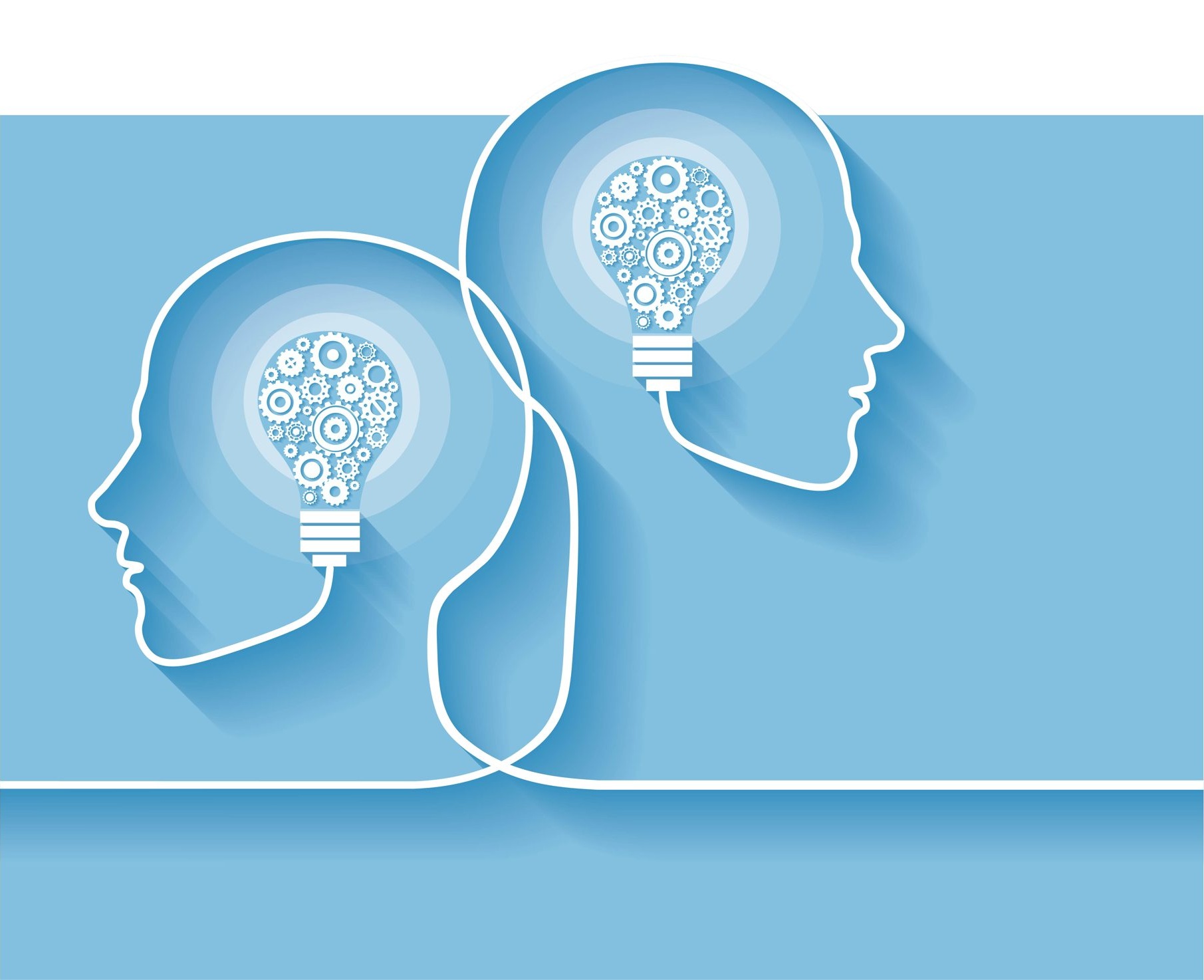
Across these disciplinary interactions, a transformation in the organisation of knowledge is observable. Traditional arrangements structured around disciplinary boundaries are gradually giving way to collaborative, cross-disciplinary models. Linguistics and computer science do not coexist in parallel; rather, they are continuously interwoven at multiple nodes.
This interweaving is not driven by singular breakthroughs but by long-term accumulation, establishing stable relationships among research, teaching, and application. The flow of knowledge has also diversified, extending from theory to technology, and returning from technological development to societal application, forming a cyclic process.
Within this structure, the role of the university is likewise transformed. Its function extends beyond knowledge production to include the connection and calibration of different systems. Language provides frameworks for interpretation and understanding, while computation offers analytical and processing capabilities; through their interaction, knowledge is transmitted and transformed across levels.
Identity Through Convergence
For MPU, this structural evolution also informs its academic positioning. Situated within a long-standing context of Sino-Western cultural exchange, the University extends its linguistic strengths into the interdisciplinary domains of language technology and artificial intelligence, establishing a coherent nexus across teaching, research, and application.
These developments have not remained confined within academia but have gradually entered the spheres of public service, cultural preservation, and cross-regional exchange, fostering connections with broader societal operations. Such connections may be understated, yet they exert a sustained influence across varied contexts.
In an era marked by the rapid circulation of knowledge and technology, the value of a university is increasingly defined by how it responds to these transformations. Through the convergence of language and computation, MPU is progressively shaping a development model that combines a strong local foundation with global reach.
Between language and computation, its position becomes ever more clearly articulated.

Sustaining Living Heritage in the Digital Age