Cities are constantly rewritten, often without notice. When a piece of history is no longer remembered, it simply fades, slipping quietly out of everyday view.
The bittersweet aroma of a traditional herbal tea shop, the calls of street hawkers beneath arcades, the rhythms and gestures of a trade, these small, concrete details form the most authentic texture of a city. Yet they are rarely formally recorded. As the people who carry these memories grow older and pass on, lived experience dissipates without trace, leaving little that can be reconstructed.
“I have always believed that people may go far, but culture cannot exist without roots,” says Professor Lam Fat Iam. “It is not just about remembering a place; it is about knowing where we come from, and considering what we should leave behind.”
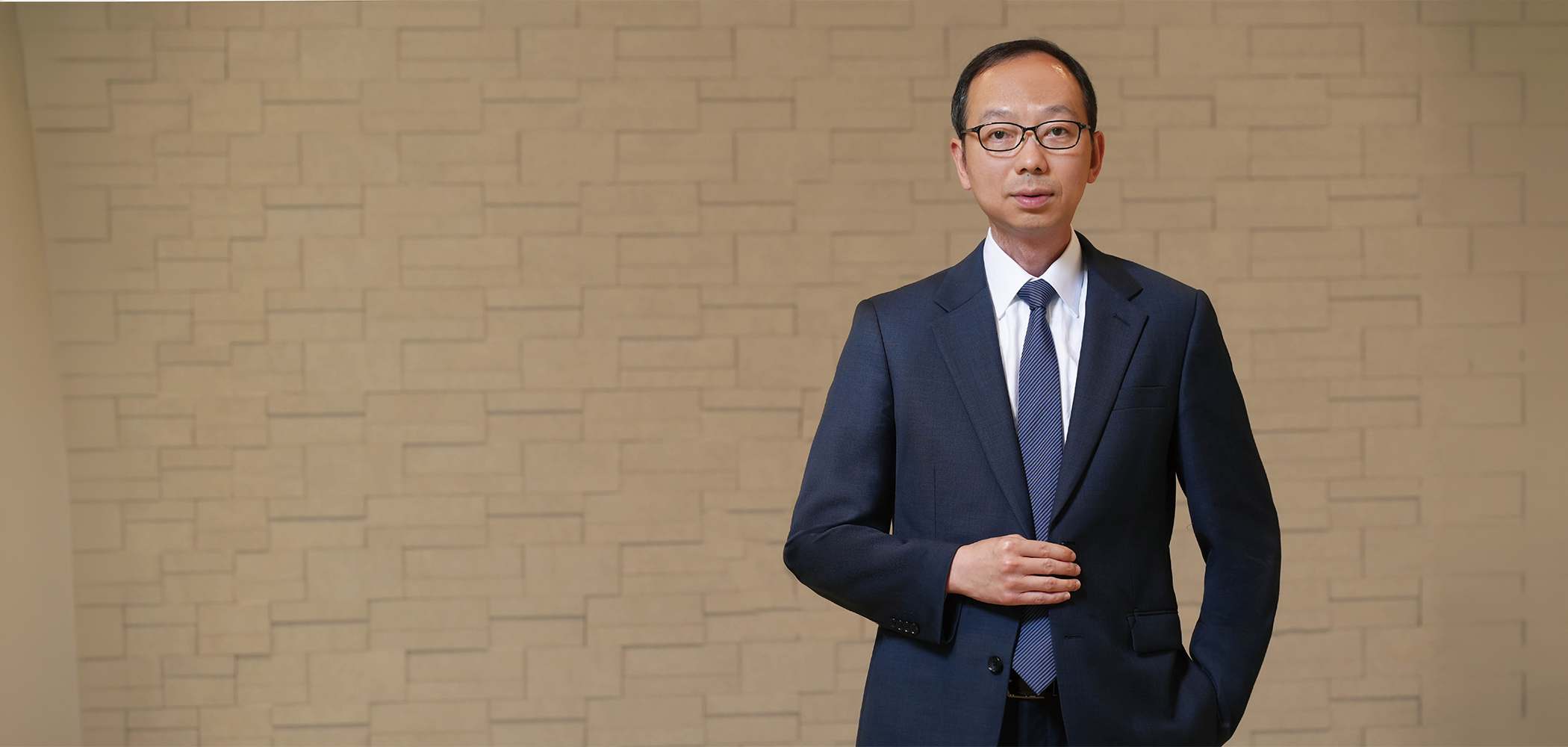
As Dean of the Faculty of Humanities and Social Sciences at Macao Polytechnic University, and a recipient of the Macao SAR Cultural Merit Medal, Professor Lam’s work extends well beyond conventional academic research. It has become a sustained endeavour in cultural stewardship. In a rapidly changing world, his focus is on safeguarding a city’s capacity to remember itself.
Histories Without Names
For Professor Lam, preserving history is not confined to major events or prominent figures. It is equally about the everyday experiences that often go undocumented.
Over the years, he has advanced a systematic approach to oral history, collecting firsthand accounts from grassroots communities through interviews and archival work. His subjects are not celebrities, but ordinary individuals — street vendors, garment workers, long-time residents — whose lives reflect the social fabric of the city. Many initially regard their experiences as unremarkable. Yet, as conversations unfold, their narratives reveal how the city truly functions.
One elderly interviewee, who began as a mobile hawker and later ran a small shop, repeatedly insisted at the outset that he had “no story to tell”. However, as the discussion progressed, he spoke in detail about how weather affected business, how customer flows shifted throughout the day, and how entire neighbourhoods transformed alongside economic change. What began as personal recollection gradually mapped out a broader history of community life.
Such accounts, though fragmentary, illuminate the underlying structures of the city. Urban history is not shaped by a select few, but by the accumulation of everyday practices. Street vendors define the character of public space; industrial workers carry the memory of economic transformation; communities preserve ways of life. Without these voices, historical narratives risk becoming partial and flattened.
Supported by the Centre of Sino-Western Cultural Studies at the Faculty of Humanities and Social Sciences, this work has evolved into a platform that integrates research and teaching. Students participate in interviews, documentation, and interpretation, engaging directly in knowledge production while developing academic skills.
Through this process, cultural memory moves beyond fragmented preservation towards a more systematic and sustainable model.
Culture in Motion
As memory is preserved, another question inevitably arises: how can culture continue to exist meaningfully in the present?
The answer is often framed in terms of intangible cultural heritage. Yet the notion of “protection” itself contains an inherent tension: when culture requires safeguarding, it frequently signals that the everyday conditions which once sustained it are weakening. Cultural practices that are naturally embedded in daily life do not require formal designation; once inscribed on official lists, they may already face the risk of detachment from their original contexts.
Intangible cultural heritage is not a matter of static display, but of living practice. It encompasses skills, festivals, languages, and ways of life that remain in active use. As a site of long-standing Sino-Western cultural exchange, Macao presents a uniquely dense and multi-layered cultural landscape: Portuguese azulejo tiles coexist with the rhythms of Cantonese opera; Macanese desserts intersect with the Dragon Boat Festival; religious processions and local folk beliefs unfold within the same urban spaces.
Precisely because of this diversity, the risk of cultural loss is correspondingly heightened. Urban renewal, population mobility, and linguistic shifts occur simultaneously; a given practice may disappear within the span of two generations. Cultural preservation, therefore, is no longer a matter of choice, but an undertaking marked by urgency.
Professor Lam has long been involved in advancing the establishment and ongoing revision of Macao’s intangible cultural heritage inventory. Under these efforts, the number of representative items has increased from 12 to 24, while the broader inventory has expanded to 120. As he observes, “Culture should not only be recognised; it must continue to be practised.”
To this end, he has sought to strengthen connections among practitioners, enabling dispersed cultural practices to return to the communities in which they originated. In this process, MPU functions not only as a site of academic inquiry, but increasingly as a platform for cultural governance and the translation of knowledge into practice.
Connecting Culture to the World
Under the stewardship of Professor Lam, the University has progressively extended its cultural initiatives beyond the local context. Collaborative research with scholars in Southeast Asian countries such as Malaysia and Singapore examines the transformation of Minnan and Cantonese intangible cultural heritage in the region, with particular attention to the transmission and development of traditional Chinese beliefs and practices within overseas Chinese communities. Within the broader national strategy of promoting Chinese culture globally, Macao, drawing on its historical background and linguistic strengths, is gradually emerging as an important node of cultural exchange.
Academic research provides a deeper level of support for these developments. In 2025, the National Social Science Fund of China was opened in full to applicants from Hong Kong and Macao for the first time. Professor Lam’s research team was successfully funded as part of the inaugural cohort. The project focuses on significant Chinese documents that have been dispersed in Portugal and Spain since 1840.
Since the nineteenth century, large numbers of Chinese classics and archival materials have circulated overseas. In the course of studying and interpreting China, many European countries have also produced substantial bodies of China-related scholarship written in their own languages. Research in this area requires linguistic competence, historical perspective, and cross-national collaboration, and highlights the distinctive strengths of MPU in the humanities. As the scope of inquiry expands, Macao is increasingly participating in the reconstruction and reinterpretation of knowledge.
As Professor Lam observes, “MPU is not only a researcher and disseminator of Macao’s culture, but also a bridge connecting history and the world.”
Culture, Ultimately, Is About People
In the end, culture returns to people. Systems can be built and records preserved, but without continuity of human engagement, they cannot endure.
Looking ahead, Professor Lam is clear about the capabilities required of future cultural practitioners: academic research, public communication, and cultural practice. These need not reside in a single individual, but a mature system must allow them to reinforce one another.
Programmes such as PhD in Cultural Heritage and Anthropology, and Master of Education in Cultural Communication and Education at MPU, reflect this vision. Students are expected not only to conduct research, but also to engage with society and participate in real-world cultural initiatives, ensuring that knowledge remains responsive and relevant.
Culture does not end at a fixed moment. It recedes gradually when it is no longer sustained. What Professor Lam seeks to do is to slow that process of forgetting: to preserve voices, rebuild connections, translate knowledge, and cultivate successors. Together, these efforts serve a common purpose: “to enable a city, even in constant transition, to recognise itself.”
As long as there are people willing to remember, the city endures. Resisting forgetting is not a task with a final conclusion, but an ongoing relay. What matters is that the baton continues to be passed forward.


Beyond the Gold
An Interview with Olympic Champions Zhang Yangyang and Jiao Liuyang